Pages

Showing posts with label words to the wise. Show all posts

Friday, June 5, 2020

Dear Family:

I'm going to begin with, "I love you," because I do.  I don't always understand you, and you don't always understand me.  I think where there is misunderstanding, resentments can fester.  How can we bridge the gap of understanding?  I think a certain amount of willingness is key.  Are you willing to learn more about me, and to understand me so that we can move beyond the edges of resentment?  Ok, you're willing?  Now, what is required is listening.  The trouble is, effective listening isn't something everyone is capable of.  If we were capable of it, we wouldn't be in this pickle.  It's a learned behavior.  Search the internet for "Active Listening."  Practice it.  If I tell you something from the heart, your job is to receive that information.  That is all.  Just receive it.  Don't meddle with it, turn it upside down and shake it, and please don't make it about you.  Now that you've actually listened to me with an objective ear, you might be a little bit closer to understanding me.  If you aren't, then you need more practice.  

I love you and I would like to be given the chance to listen to you, too.  Are you looking for deeper, more honest relationships?  I am.  I hear that you might not want to get too close to other people's flames, but honestly, what kind of life is it to refuse to acknowledge the discomfort of others?  Tell me what makes you uncomfortable so I don't have to guess. Sometimes, when you bottle that stuff in, your idea of reality is nowhere near the truth, and you've been worried about something that doesn't exist.  Challenge yourself to find an interpretation that isn't dramatic or traumatic. Own your pain. Let other people own their pain. You can't have mine and I don't want yours! Don't try to take control of my struggle and make it yours. 

I love you, but generalizations about me aren't helpful.  If you tell me that I always act a certain way and I'm behaving in a typical pattern, you are demonstrating your lack of awareness of my growth.  I'm a dynamic person, and I am always changing.  So are you.  If you peg me into a square hole in your head, you'll never get to experience my roundness.  If you have bought into the idea that people don't change, there are no legitimate studies that support your claim.  Quite the opposite.  If you keep expecting people to not change, you aren't leaving them any room for growth. Sometimes, it's easier to act out expected roles than to deal with the pushback of change. You probably don't want to be responsible for hindering another person's growth.  Keep your eyes open for humans exploring their potential.  And, please, explore your own. You aren't trapped. I would love to see you grow.  It's happening whether you admit it or not, so let's celebrate your growth and change.

I love you, but when you question my choices, you question my humanity.  You don't get to play God with my choices, especially at my age.  If you don't like how I present myself, or who I spend my time with, or if you think that I am hurting someone by being my true self, or if you refuse to be in parts of my life but want full access to other parts, something is really wrong with your concept of "love and support."  You don't get to come into my life only if I continue to act in ways that don't disrupt your concept of who I am.  You are afraid of something, but it isn't me. If the people I surround myself with make you uncomfortable, consider that they may be my chosen family.  You get to choose whether or not you accept my chosen family, but you don't get to reject my family and then complain that I never call or visit you.  It shouldn't have to be an act of bravery for me to show up in my true form, but it is.  I have had to work on being brave all my life. I'd like to see you be brave and accept my true form -- my shifting, growing, true self.

I love you, but acting out of shame and fear is not love.  When you protect the tender feelings of others from my reality and my truth, you are not doing anyone any favors.  When I embarrass you because I did something you think is inappropriate, that is your shame talking, and it has nothing to do with me.  Shame has no place in loving relationships.  Shame is the most damaging and isolating act you can impose on another, especially if you are calling it "love." Calling fear and shame "love" is really confusing. I am working on becoming resilient to your shaming and fear and I'm learning what love really is.  It's your work, too.  I don't know who taught you these tools of shame and fear, but they were wrong to do so.

Some day, we're all going to be dead.  I have one chance at this life, and I recognize that you might miss me now as if I am already gone. I'm not.  I'm here, ready to sit down to dinner with you, but on my terms of mutual respect and dignity.  I won't accept an invitation with caveats of rejection.  I won't be treated as if I am less-than, an embarrassment, or that I've made poor choices, just so I can gain your approval.  I love you, and I accept that you might not like my terms.  The invitation still stands.

Thursday, December 6, 2012

On the Offering of Advice

Have you found yourself compelled to give unsolicited advice to people who are poor decision-makers, even when it's repeatedly ignored?  You may feel strongly that it is in their best interest for you to step in, speak up, and point out their folly.  But before you offer potentially unwanted advice, it is worthwhile to consider the complex human behavior that leads us to either take advice or ignore it and make our own decisions.  Have you asked yourself what it is about your tactics that leads to a failure to persuade or dissuade?  If you consider what goes on under the surface of these human interactions, you can tailor your advice to be more convincing.  Or, you may choose a different path altogether.

On the offering of advice...a preparatory guide:

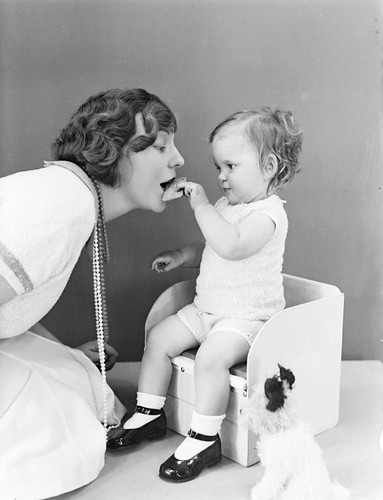
We encourage our children
to be independent, to a point.
  • From the time you could walk and talk, you have been developing independence.   As humans develop, we take advantage of opportunities to establish ourselves as free-willed thinkers, sometimes in defiance of our elders' wishes.  I suspect the desire to be a unique individual peaks in the late teens, early twenties.  That's why we set our children loose at that age.  They need to make their own mistakes and find their own way.  Hormones, habits, memories,  independence and a desire maintain individuality--all of these things contribute to the choices we make. 

  • You have something to gain from giving advice.  What is it?  Are you hoping to save her from dire consequences?  Are you wanting her to ignore the advice yet again so you can say, "I told you so"?  Are you embarrassed by her errors in judgment?  Or, is she needing to hear it because she is harming others with her behavior? Examining your motivation might reveal that she is competing with you for gains, because she has something at stake as well.  Honesty, especially with yourself, goes a long way here.  Otherwise your motivation could seem suspect.

  • Your clothing tips remind her of  that
    oppressive dress code from childhood.
  • What is your relationship with the recipient of your advice?  Are you approaching him from a loving standpoint, or one of disdain or habitual power play?  Are you a co-worker?  A parent?  A sibling?  If you examine the relationship and determine that you are acting out of caring and love for the other person, does your advice show it?  Do you remind him of something from his past that shuts him down?  Sometimes we don't fully understand our relationships, and that can lead to a disconnection between ourselves and the other person.  For example, something about your advice may remind him of a time in his childhood when he was bullied by his peers.   Or, you might be evoking the rebellion of his youth because you sound parental.  He may not even realize this.  It's worth consideration.  

  • What advice has been given before, and why didn't it work?  Are you starting to sound like a broken record?  Is that how you want to sound?  Are you being flexible in your expectations, or can you only see things your way?

  • Have you asked her what she wants?  Maybe she is seeking the help you are offering but would rather be asked first.  More likely, she might want to figure things out on her own.   Does she have the same goals that you have for her, or are you wanting her to live your dream?  Is she happy with the decisions that she has made so far?  Is she the only one making the decisions, or is her partner involved?  Is  the issue legitimately your concern?

  • Have you given him the space and time to make the decision on his own before offering your two cents?  As an adult, he wants to own his actions entirely.  If you tell him to send thank-you cards for Aunt Emma's handmade sweater, it will feel to him like he's doing it because you told him to, not because he is an independently grateful person.

  • This turned out to be not such a
    good idea in the long run.
  • What is the gravity of the situation?  Is he irreparably harming himself or others, or is he your constant worry or inconvenience?  If the wrong choice is made, will he be able to undo what has been done?  What resources do you have to truly help him?  Do you need support from others such as a support group, a professional, close friends, family, or clergy? 


  • Do you engage her in other ways that make her feel validated?  Is your disapproving opinion dominating the conversation, or do you also give her props and kudos for her accomplishments?  Do you normally have conversations of substance (i.e. not the weather) that don't focus on the negative?  Who else is hearing your interactions?  You could be invalidating her by pointing out her foibles constantly.  Additionally, if you talk to others about the issue when she is not present, her resentment might override her judgement. 

  • Against everyone's advice,
    he followed his dream and
    joined the circus.


  • What example have you set?  Nobody likes taking advice from a hypocrite, nor do they want to feel as if you have an air of superiority.  If you're imparting sage wisdom because you've "been there, done that," can you share your story rather than attempt to shape his with a word to the wise?  If your recommendation is driven by your guilty past or your own poor self-image, a re-examination of your motivation might be in order.  


  • A very important question to ponder is, "what is the worst possible outcome if I say nothing?"  You might find yourself asking this question more and more often as you see how liberating it can be to live and let live.  Sharing your personal stories and having loving, listening conversations with the people you care about is often a relationship-builder and a better route than offering up suggestions for how others could be doing things differently.